Contemporary Kitchen Design Ideas for a Modern, Elegant Home
The Kitchen’s Modern Identity: Where Design Meets Daily Ritual
The Contemporary kitchen of the present day has grown significantly beyond being merely a place for cooking and food preparation. What was once envisioned solely as a utilitarian workspace has now developed into the “heart” of a house, emotionally and visually – a blending of design, memory and movement. With the emergence of modern interior design, the kitchen has established itself not only as a social gathering place but also as a retreat for people, where people can gather with friends and guests or merely prepare their morning coffee quietly.
The primary design philosophy of the modern kitchen is centered on creating a sense of balance. In other words, the modern kitchen needs to be visually appealing and aesthetically pleasing without compromising on comfort and functionality; it should not be so utilitarian that it feels sterile or clinical. Rather, the goal of designing a modern kitchen is to create an experience that is harmonious, where all the surfaces, lines, and materials work together to create an intentional, humanistic experience.
This idea relates back to the original belief of the writer Laura Esquivel that the kitchen is a space for us to learn more about ourselves and our past. In the current era, that understanding is expressed through the design of the kitchen in a thoughtful manner—creating a space that provides for the needs of people today while at the same time respecting the traditions of the past, and one where the functional aspects of the space enhance the overall enjoyment of everyday living rather than disrupting or detracting from it.
Fundamental Hallmarks of Contemporary Kitchen Design
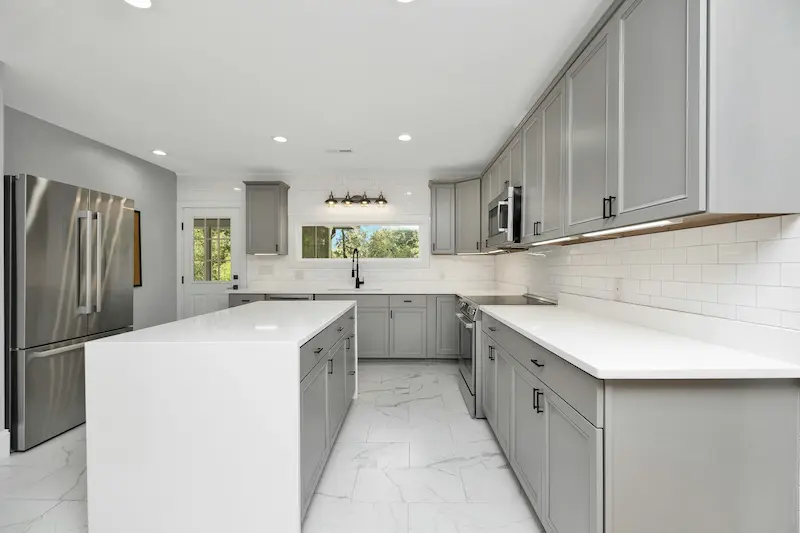
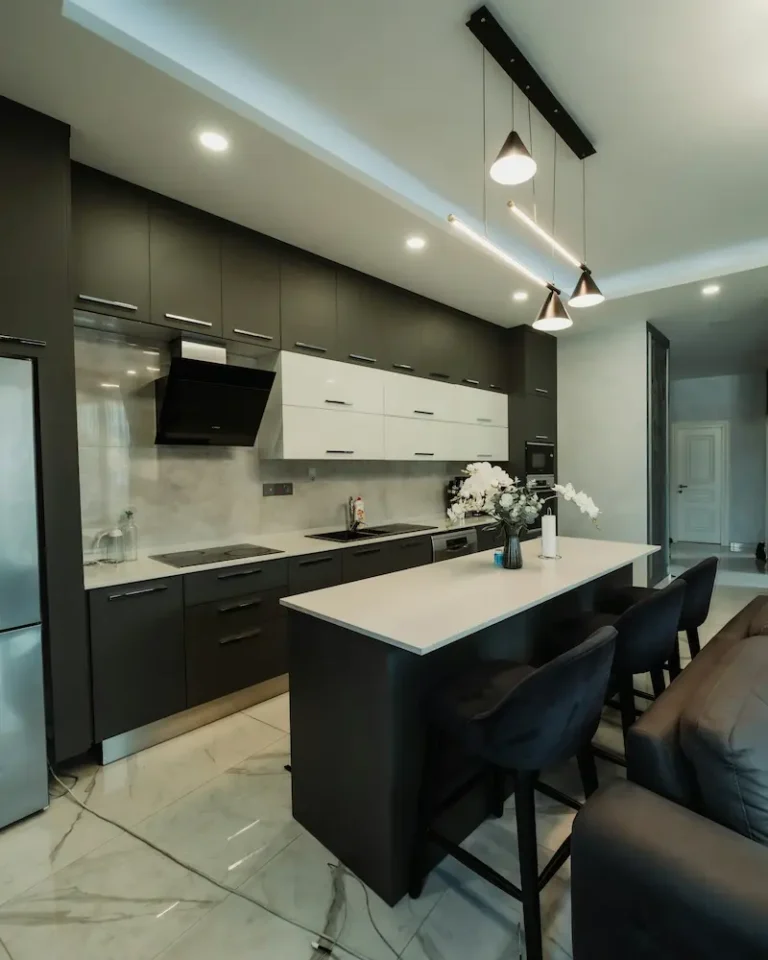
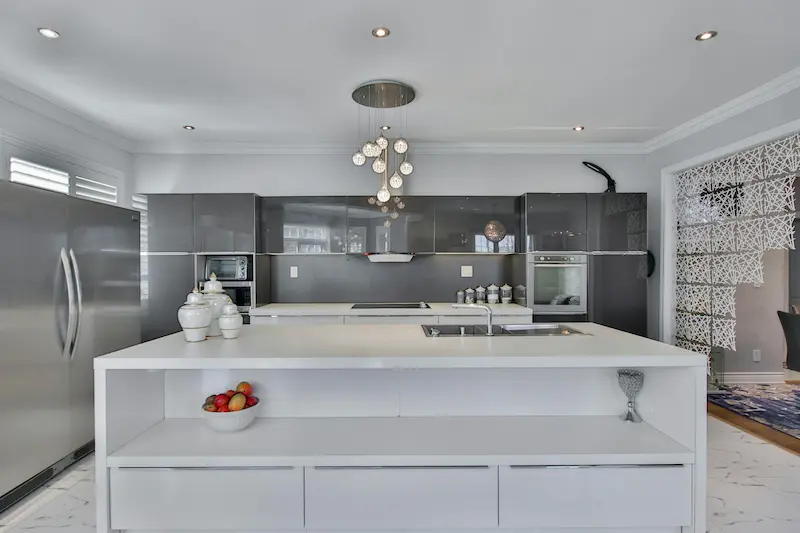
Perfectly designed kitchen spaces are achieved through outstanding architectural principles. Flat-panel cabinetry, clean lines and minimalistic colour palettes create a calming and orderly environment in today’s kitchens. A monochromatic colour scheme using white, soft grey, warm taupe and dark charcoal allows the natural beauty of the furniture’s shape and texture to show through, instead of having a cluttered appearance.
The insertion of appliances within seamless designs allows for the use of organic shapes without interruption, with many fixtures continuing down to the ground creating a sculptural flow. The use of these design features will create a space that has a calm, uncluttered, and expansive feeling of being in control of one’s environment.
Examples of the many characteristics that define contemporary kitchen as notable are:
- Handleless cabinetry so there are no discontinuities in visual continuity or planes of furniture.
- Open shelves can be used as an alternative to bulky cupboard designs and can be used to display items with care.
- Many modern kitchen hoods are designed to be artistic rather than just functional and serve as the focal point of a kitchen. This can create a unique contemporary kitchen.
By including all of these elements, the result is a purposeful, refined, and it effortlessly epitomises what we perceive as contemporary kitchen design.
Architectural Strength: Lines, Geometry, and Space
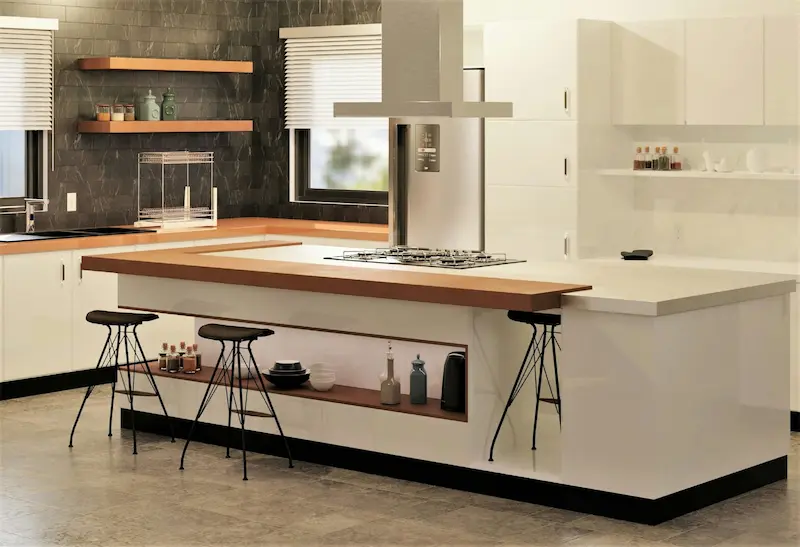
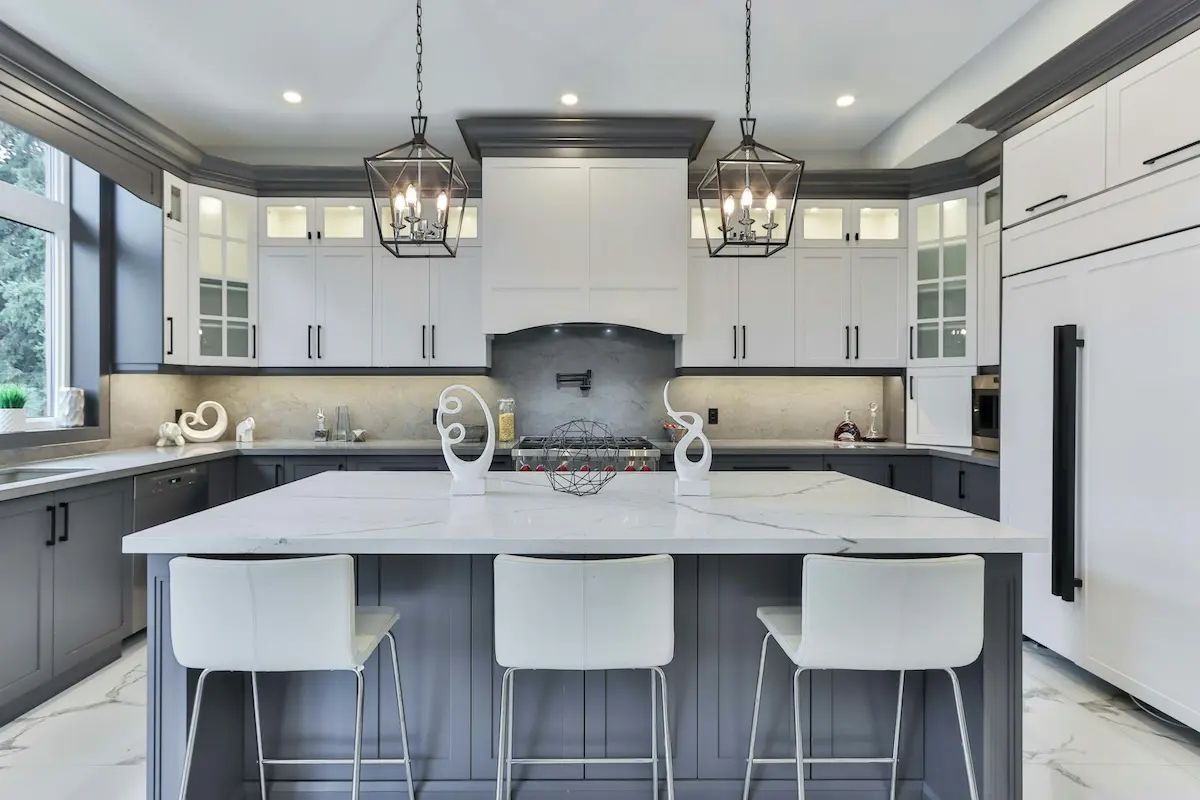
Geometry is used in many modern kitchens to create a certain visual interest. The usage of sharp angles, linear layouts and smooth surfaces draws the eye and provides a sense of organization. For instance, a kitchen island may act as a geometric statement and can be long, curved or asymmetrical, thus creating a focal point without breaking the overall flow of the space.
Visual rhythm is produced through the use of repetition and alignment of similar elements. For example, all cabinet lines align with ceiling details, and all islands align with the proportions of a window, and all light fixtures align with the architecture. This repetition of specific features creates a uniformity throughout the Kitchen Design, therefore allowing even the most dramatic design elements to feel equally harmonious rather than overbearing.
When designing a contemporary kitchen, it is also vital to take into consideration the use of Negative Space. The overall look of a contemporary kitchen is not about occupying every open space, but rather creating open regions for the elements to “breathe”. Open areas and empty space provide visual peace, thus producing a Kitchen Design that feels more relaxed and purposeful.
Smart Storage and the Psychology of Organization
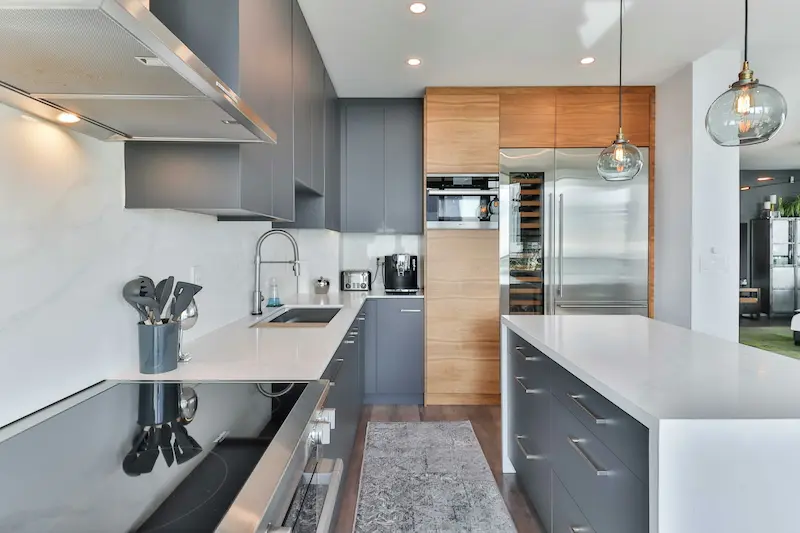
With today’s modern home kitchens being both technologically advanced and aesthetically pleasing; hidden storage solutions reduce visual clutter allowing an otherwise busy cooking area to be transformed into a ‘kitchen sanctuary’ by removing excess clutter from sight. A pull-out pantry, hidden cabinets (drawers) and appliance garages allow easy access to everyday items without taking away from the overall appearance of the kitchen.
Organizing your kitchen items has mental benefits as well – Organized kitchens operate smoothly and thus tend to cause less anxiety to those working there and increase the likelihood that kitchen users will express their creativeness. Today’s more sophisticated cabinetry features touch activated doors and soft close mechanisms, creating a more seamless, natural feel of flow between an individual and the kitchen while preparing food—a much more comfortable feeling than one would experience with traditional cabinet designs which require shaking, banging and jarring motions to operate.
Utilizing customized interior storage solutions like customized drawer dividers designed specifically for your kitchen tool(s) and shelving units arranged specifically to your cooking methods, create a world of sophistication to your kitchen. Each one of these ‘invisible’ details create a ‘standard’ versus an elevated kitchen experience; both from a functionality and aesthetic viewpoint.
Materiality: The Art of Mixing Textures
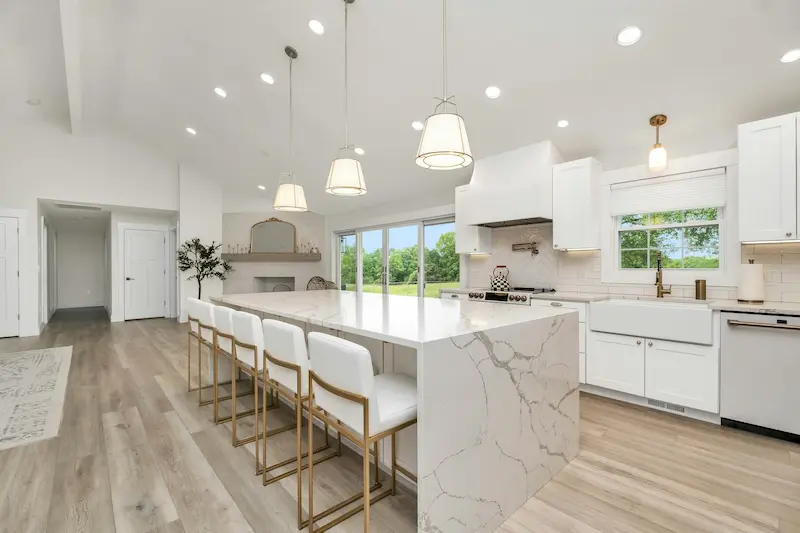
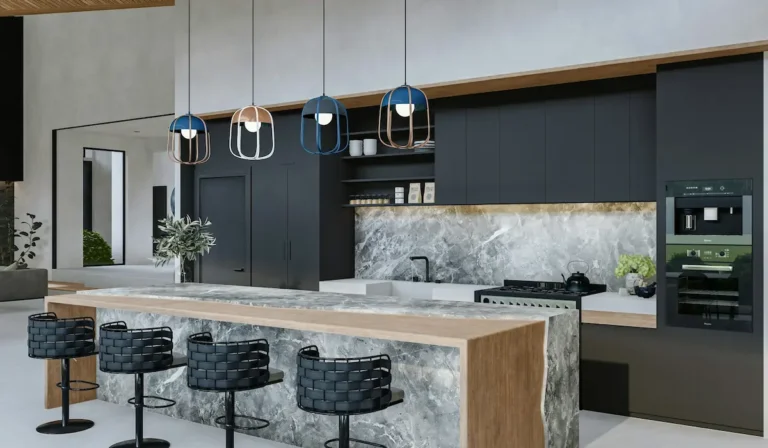
Contemporary kitchen achieve a depth and personality by providing the Series of Material options. The most successful examples are those where a juxtaposition of contrasting textures creates an auditory dialogue within their overall visual appearance. The coolness of the marble counter surfaces juxtaposed to the warm wood cabinetry provide balance, while the softening of the cold concrete surfaces by adding metallic accents creates a subtle but dramatic look.
The essential ingredient is moderation. Using only three primary materials allows for contrast but still creates a unified look. Color undertones must coordinate—i.e., warm with warm and cool with cool—to prevent a clashing visual aesthetic.
Unexpected combinations of materials are a great way to personalise the kitchen. The combination of brushed-brass faucet fixtures with matte-black cabinet doors provide a very contemporary and a very classic look. Displaying handmade ceramic pieces on the same countertop as engineered quartz surfaces adds an additional layer of craftsmanship that breaks the impersonal feel of the kitchen.
Lighting as Sculptural Art
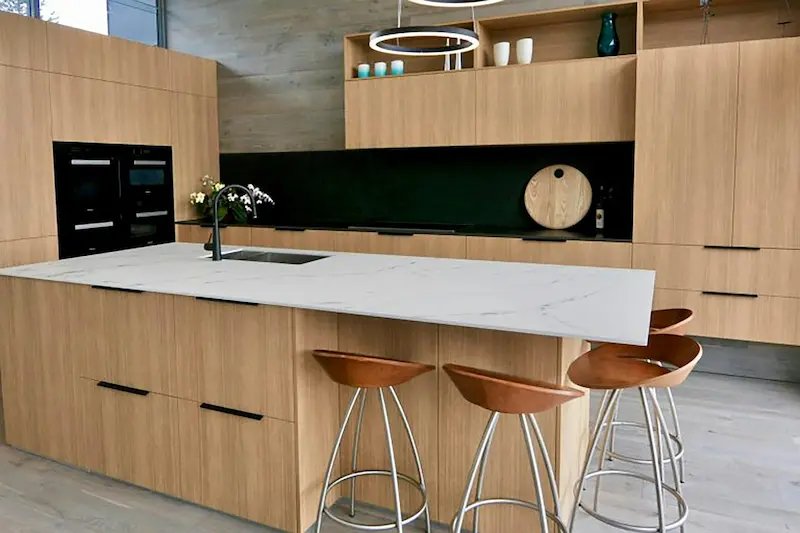
Contemporary Kitchen Use Lighting as a Design Element Lighting in modern kitchens is now a very important design element, rather than just an afterthought. Pendant lights or chandeliers help to create a focal point, particularly in an open-concept kitchen (where an open-concept layout must hold its own visually).
Proportion is important when selecting the size of your light fixtures. Oversized geometric lighting can be an eye-catching feature; however, if not carefully selected, the fixture will not be appropriate for the dimensions of the kitchen and will not create the necessary balance. When layered correctly, the quality of light will be both the function and the expression of the design in your kitchen.
In addition, the use of layered lighting in the kitchen creates a complete experience. Under-cabinet lighting serves as task lighting, while wall sconces and recessed LED lighting provide ambient light. Together, all three styles will create an overall balance of light throughout the kitchen and create the ability to transition from daytime to the nighttime throughout the day.
Strategic Solutions for Small Kitchens
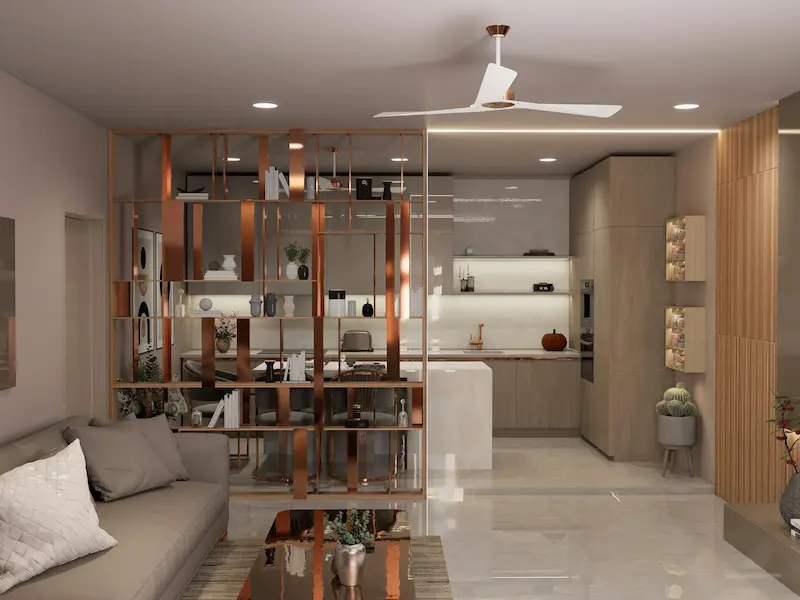
Small Contemporary Kitchen are ideally suited for modern design. Streamlined cabinetry, handleless cabinetry fronts, and slim profile multi-functional islands create a visual lightness throughout the space. Everything placed in your small kitchen has a purpose.
Creating visual depth is achieved through the use of reflective surfaces. Glass backsplashes, polished stones, and metallic finishes reflect and diffuse light throughout the space, creating the illusion of more space and a more dynamic kitchen.
With careful planning, even the smallest kitchens can feel open and modern and function-efficiently.
Curation and Purposeful Minimalism
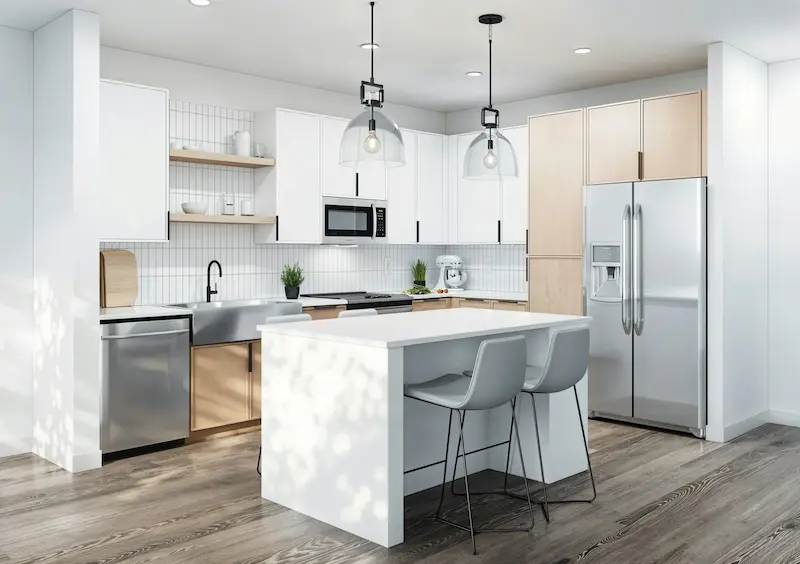
In minimalist Contemporary Kitchen , instead of being devoid of décor, a minimalistic kitchen is a kitchen that uses the least amount of objects for maximum usage, meaning that every object chosen for the kitchen has a reason for being there. All geometrical storage containers, sculptural wooden cutting boards, and ceramic bowls serve as beautiful decoration and yet still have their original unique purposes.
Basic kitchen supplies are also elevated. Olive oil in an artisan bottle, precision-made utensils, and sophisticated cookware are all used in this way, enhancing the kitchen with visual aesthetics rather than clutter. This approach will change your everyday experience into a set of refined rituals.
Innovation and Livable Luxury
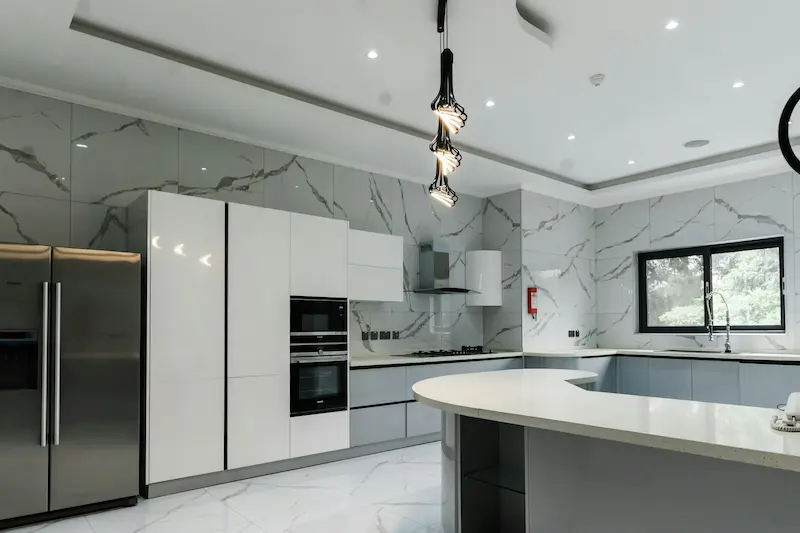
Technology is an integral part of today’s kitchens and is integrated seamlessly. Voice-activated faucets, smart refrigerators, and invisible LED light sources make daily life easier without becoming a focal point.
The true luxury of contemporary kitchen is in having invisible intelligence. Systems, such as motion-sensor drawers and personalized lighting settings, anticipate your needs, while hidden environment control devices make the daily experience better without becoming a distraction from your daily experience. Modern Kitchen Luxury Is Not Excessive It Is About Convenience.
Conclusion: A Contemporary Kitchen That Lives Beautifully
A kitchen that feels rich and inviting is the hallmark of a successful contemporary design. Richness without excessive formality is created by the mix of warm toned oak cabinets with cool toned white marble tops, and the inclusion of intelligent light fixtures as well as creative user-friendly storage options enhances the function of this room to be used in the day-to-day activities of life.
In conclusion, your new modern-day kitchen is an extension of yourself. In modern times, we value purposeful living, social interaction, and the ability to enjoy luxury in all that we do. More than just a room for cooking or entertaining, a modern kitchen is where the aesthetic works in harmony with the sensory experience through touch, smell, and sound.